

Author D.G. Comer Examines the Quiet Forces Undermining Tribal Sovereignty
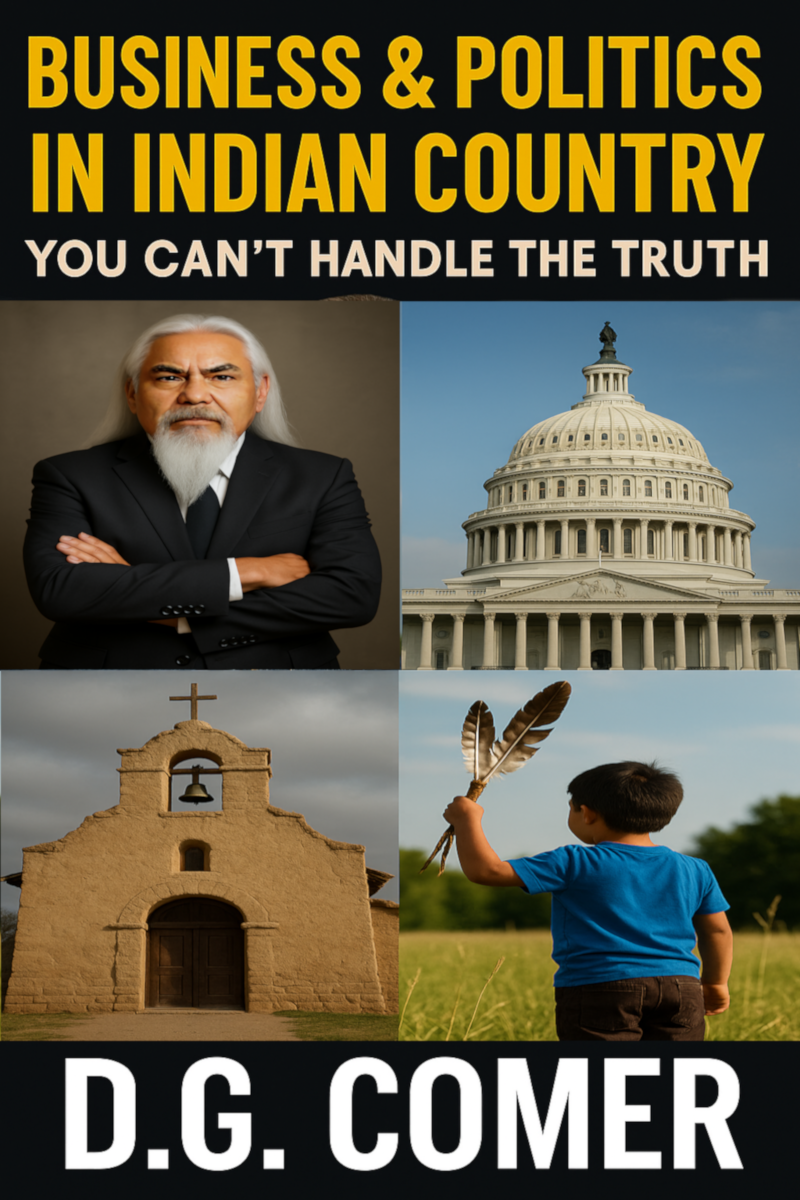
Cover of Business and Politics in Indian Country – You Can’t Handle the Truth by author D.G. Comer.
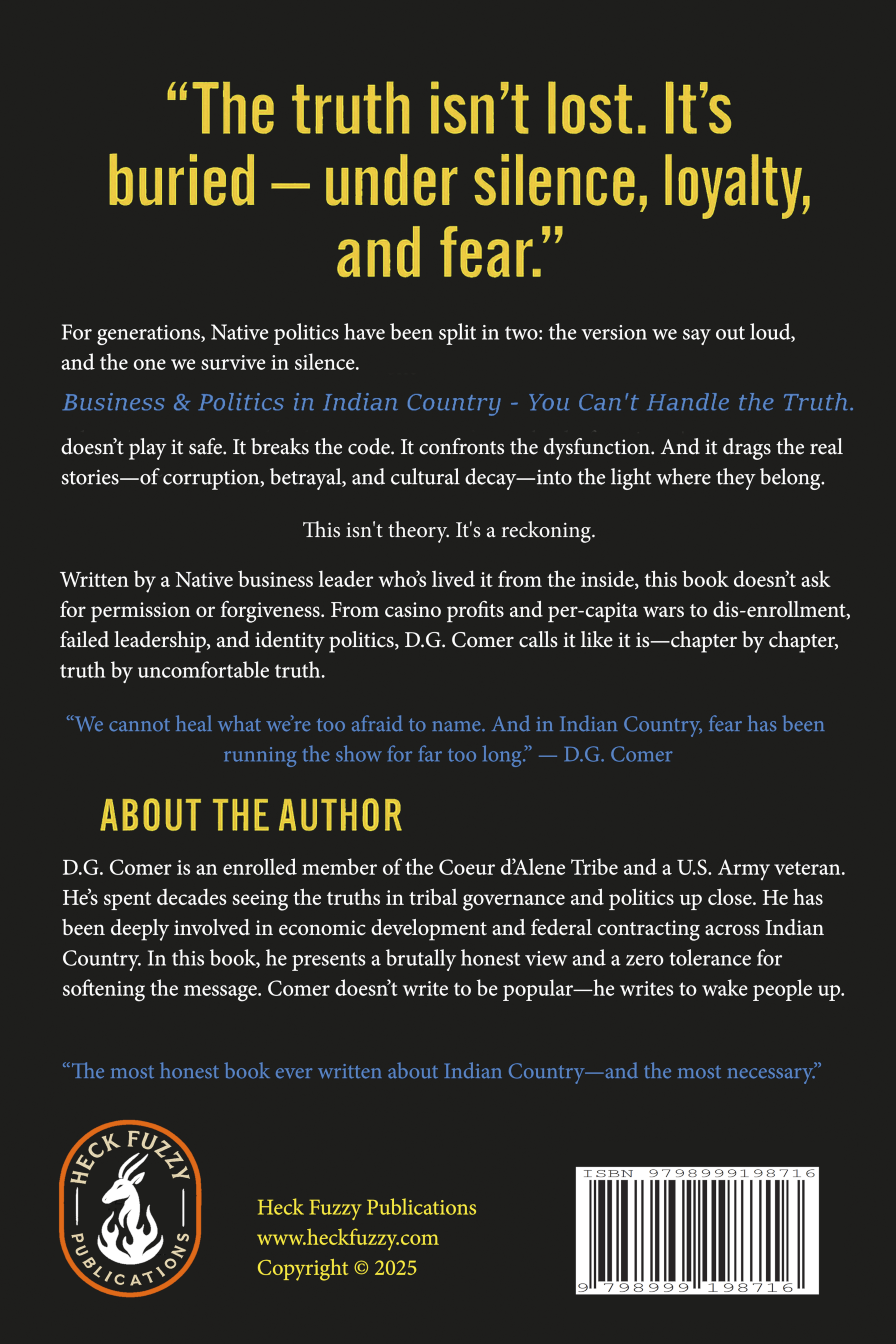
Back cover of Business & Politics in Indian Country

Heck Fuzzy Publications | Where truth finds its voice.
An examination of internal governance dynamics, accountability gaps, and systemic patterns that quietly undermine long-term tribal self-determination.
PUPOSKY, MN, UNITED STATES, February 8, 2026 /EINPresswire.com/ -- Author and business executive D.G. Comer is drawing renewed attention to the less visible forces shaping governance and economic outcomes in Indian Country, arguing that systemic dysfunction often persists not because of a lack of resources, but because of entrenched political, administrative, and cultural incentives that resist reform.
In his book, Business and Politics in Indian Country – You Can’t Handle the Truth, Comer examines how poverty, dependency, nepotism, and internal political dynamics continue to undermine tribal sovereignty—often from within—despite decades of federal programs, economic development initiatives, and well-intentioned reforms.
“Much of the conversation around tribal governance focuses on external forces—federal policy, historical injustice, and underfunding,” Comer said. “Those realities are undeniable. But they don’t explain why some systems fail repeatedly even when opportunities, capital, and authority are present. That conversation is far more uncomfortable, and it’s the one we tend to avoid.”
Unlike conventional political commentary, Comer’s work is grounded in operational experience across tribal enterprises, governance structures, and economic development environments. The book does not offer partisan prescriptions or abstract theory, but instead documents patterns that recur across regions and institutions—patterns that, left unexamined, quietly erode long-term self-determination.
Key themes explored include:
The unintended consequences of dependency-based economic models
How internal political incentives can discourage transparency and merit
The tension between sovereignty and accountability
Why reform efforts often fail without cultural and structural alignment
Comer emphasizes that the book is not an indictment of tribal governments, but a call for more honest internal dialogue.
“Sovereignty isn’t just about authority—it’s about responsibility,” he said. “If difficult questions can’t be asked internally, they eventually get answered externally, and usually not on our terms.”
Business and Politics in Indian Country – You Can’t Handle the Truth continues to gain attention among readers interested in governance reform, economic sustainability, and long-term institutional health within tribal communities.
The book is available through major online retailers.
About the Author
D.G. Comer is a business executive and author with experience in tribal enterprise operations, governance environments, and economic development initiatives. His work focuses on the intersection of policy, accountability, and long-term sustainability in complex organizational systems.
D.G. Comer
Heck Fuzzy Publications
author@heckfuzzy.com
Visit us on social media:
LinkedIn
Facebook
Legal Disclaimer:
EIN Presswire provides this news content "as is" without warranty of any kind. We do not accept any responsibility or liability for the accuracy, content, images, videos, licenses, completeness, legality, or reliability of the information contained in this article. If you have any complaints or copyright issues related to this article, kindly contact the author above.
